Tip
When people don't want to be filmed
Point the camera at yourself, don't delete and don't argue, greet them and keep walking — and where it's genuinely taboo, ask first rather than apologise after.
When people don’t want to be filmed
Distinct from don’t point the camera at private moments, which is about what Harry chooses not to shoot. This is about what he does when someone objects — which happens constantly in some countries and almost never in others.
His method, assembled across several countries:
- Turn the camera on yourself and say so. Most objections come from people who assume they’re in shot when they aren’t.
- Don’t delete, and don’t argue. He declines both, politely.
- Greet them, wish them a good day, and keep walking. His phrase is kill them with kindness.
- Go in with the energy you want back. In a market where he expected hostility, his read was that people match whatever you bring.
- Where it’s genuinely taboo, ask first.
How Harry applies it
Mercato, Addis Ababa, is the hardest case in the bundle: he is told to stop within thirty seconds of arriving and repeatedly afterwards. Nobody threatens him. He points out that one man drew attention to himself by objecting when he wasn’t in shot at all, and the smile-and-move-on approach works every time.
The khat market in the same city is where he gets the rule explained rather than just enforced. A seller tells him the etiquette directly: ask before you photograph, and don’t photograph what you haven’t bought. Harry apologises and complies. He also notes that five football shirt shops in a row refused him, and guesses — without asserting it — that it’s because the shirts are counterfeit.
He does not always comply. At a chicken market in Delhi he was told to delete his footage and refused, on the grounds that the man had authority rather than a reason. And in Amritsar, plainclothes police stopped him and demanded to see what he had shot; he showed them, spoke a little Hindi, and the stop ended with everyone smiling.
The distinction he draws in practice: a request gets courtesy, an order without a reason gets politeness and nothing else.
Demonstrated in
- I Entered Ethiopia’s War-Torn Rebel Zone 🇪🇹 — Mercato, and the camera-on-himself method.
- Surviving Ethiopia’s RAW Meat Sidequest 🇪🇹 — the khat market, where a seller explains the etiquette instead of just refusing.
- I got Kicked out of the Golden Temple for this 🇮🇳 — police demanding to see his footage, defused with a few words of Hindi.
- Avoid Delhi! Come here instead 🇮🇳 — the one time he refuses to delete.
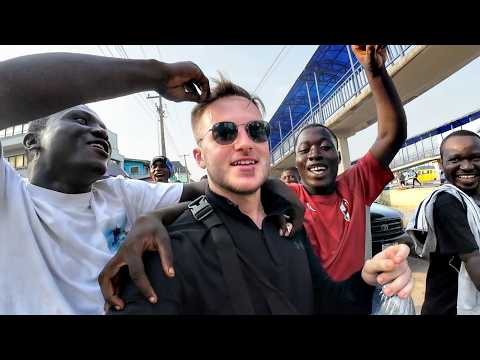
- I Visited Nigeria’s Biggest City (Avoid These Men) 🇳🇬 — the variant where the objection isn’t sincere. Twice in Lagos Harry is told he can’t film by men who want paying for permission, once by a group claiming to be local-government officials who can’t produce ID. His answer each time is that he is filming himself, said cheerfully and without stopping, and it defuses all of it.
- Solo Entering the New Syria (After the Dictator Fell) — the version worth copying from the other side of the camera. A Damascus sweet seller refuses so warmly that Harry calls it the most respectful “don’t film” he has ever been given, and buys from him anyway. In the same video he films none of the armed security in the city, on the grounds that he has just arrived and isn’t going to put a camera in anyone’s face.
- I Visited Istanbul With No Plan 🇹🇷 — the version where Harry works out why and accepts it without arguing. Refused by a Grand Bazaar seller, his reading is that the stock is counterfeit and a camera creates a real problem for the man — and that some people simply don’t want filming, which he says is normal and fine. He moves on and films someone who doesn’t mind.
- Attacked and Arrested in Cameroon’s Deadly Protests 🇨🇲 — the sharpest version, because the reception flips mid-video. Everyone in Douala was fine with the camera until New Bell, where Harry says on camera that people aren’t happy to see it and reads it correctly: they think he is a journalist. He names the change and stays anyway, and what follows is the argument for having left.
- 48 Hours with West Africa’s Most Notorious Warlord 🇱🇷 — two confrontations in Monrovia, handled the same way both times: stay calm, say plainly that the camera is pointed at himself and not at them, agree that it’s a free country without pressing the point, and keep walking. Neither escalates. It is the most practical demonstration on this page because in both cases he is alone, visibly foreign, and in a place where standing still is the mistake.
Videos featuring When people don't want to be filmed

Video
Attacked and Arrested in Cameroon's Deadly Protests 🇨🇲
Election day in Douala — strangers buy Harry beers and warn him off a road, then a market crowd in New Bell mugs him and Kieran spends eleven hours in a cell accused of espionage.

Video
Solo Entering the New Syria (After the Dictator Fell)
Crossing overland from Beirut into a country you couldn't visit independently in Harry's lifetime — a free land-border stamp, a street exchange rate, a 500-year-old hotel, and a policeman who says nowhere is safe.
Video
I Visited Nigeria's Biggest City (Avoid These Men) 🇳🇬
Marina Market on Victoria Island — men who demand payment to film and claim to be officials, a tailor who makes an outfit in a day, and a shoe cleaner who doesn't know his own age.

Video
48 Hours with West Africa's Most Notorious Warlord 🇱🇷
Harry arrives in Liberia with a name and no contact, finds the warlord known as General Butt Naked by asking in a market, and spends two days asking whether a man who confessed to mass killing can have changed.

Video
I Visited Istanbul With No Plan 🇹🇷
Four days in Istanbul — coffee brewed in hot sand, a barber who sets Harry's ears on fire, baklava from an 1864 shop, the Grand Bazaar, and a hammam running since 1720.

Video
Surviving Ethiopia's RAW Meat Sidequest 🇪🇹
A full day in Addis Ababa — seven coffees, a khat market where nobody will be filmed, a coffee ceremony for 25 birr, and half a kilo of raw beef eaten as a test of courage.
Linked from
- Addis Ababa Place
- Lagos Place
- Ethiopia Country
- Keep moving Tip