Country
Nigeria
Harry's observations from a 2024 Nigeria trip — the country he found most unfairly labelled, where asking a foreigner for money is routine and the welcome is real anyway.
Nigeria
Harry travelled Nigeria in April 2024, north to south, and sets the trip up as a test of a reputation: he had seen the country described as the worst in the world and the most dangerous in Africa. His counter-position is the one he brings to most such places — that after two years of full-time travel, the number of unjust perceptions is the thing that keeps surprising him.
The frame he gives before going: the largest population in Africa, rich in natural resources and culture, with a fast-growing economy, alongside real inequality and corruption.
Observations
From I was Beaten up in a Nigerian Boxing Match 🇳🇬
- Being asked for money is constant, and Harry names it as the thing he finds hardest about the country. His response is not to refuse everyone but to pay people who are doing something — performing, working, providing value — which is the rule he applies everywhere.
- The asking is not aggressive. The street performers he films leave the amount to him rather than pressing for a figure, which he notes approvingly. He paid about $10, or 16,000 naira, and thought it fair for the work.
- Loud conversation isn’t argument. Negotiations sound like rows to an outsider and aren’t; he flags it early because it would otherwise read as hostility.
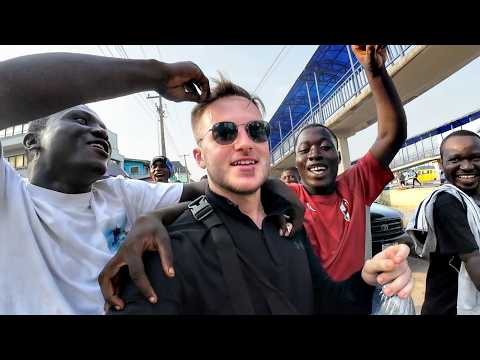
- People look far less friendly than they are. His description is that strangers stare with grumpy faces and turn out to be warm the moment you speak to them.
- Alcohol is sold even in the Muslim-majority north, which he singles out as unusual.
- Handball, not football, is what he finds being played in a Kano sports centre.
Obs: the subtitles on the Dambe video are auto-generated and garbled in places. Names and figures from it are recorded only where the source is unambiguous.
From Inside Nigeria’s Most Dangerous City 🇳🇬
- The average wage is $27 a month, which Harry gives as the fact that explains the whole day and returns to twice. He tells viewers who find his treatment shocking to work out what they would do on that money.
- Lagos is not the capital. Abuja is, moved for being more central.
- Cities are filling from the villages. Lagos at nearly 20 million is a migration story; people arrive for work, don’t find it, and buy stock to become their own sellers instead.
- Emigration is the standard answer to what people want. Almost everyone Harry asks names the UK or the US.
- Refusing well matters more than refusing. He says no constantly and says it to people’s faces with a reason — if he pays one, everyone comes — and the one time a crowd closes in he gets out by staying friendly and firm.
- A tourist price is worth arguing, a poor person isn’t. Quoted triple for fried dough and told he could afford it for wearing Gucci, his answer is that the price is the problem and he’d have bought more at a fair one.
- Health and safety is absent: bamboo scaffolding on a live building site in the middle of a market, no refrigeration on the food stalls, and a working railway used as a footpath and a marketplace.
- Afrobeats is the soundtrack — Asake, Davido, Burna Boy.
- Oyibo is what gets shouted at a white visitor.
From I Visited Nigeria’s Biggest City (Avoid These Men) 🇳🇬
- The anger is at the government, not the country. Sellers volunteer, at length, that Nigeria has every resource it needs to live well and that the leaders treat those resources as personal business. Nobody Harry speaks to blames the place itself.
- Expect gatekeepers on the camera, and expect some of them to be inventing their authority. Men claiming to work for the local government stopped Harry, said he should have seen them first, and produced no ID and a dead phone number.
- Religion splits north and south: Lagos roughly 70% Christian and 30% Muslim, with the northern states predominantly Muslim.
- Tailoring is fast and cheap — a full outfit made the same day for 20,000 naira.
- Unasked-for help creates an obligation. Strangers will work out where you’re going and take you there, then expect paying; Harry pays about 1,000 and notes the queue it produces.
- Cash is awkward. 500-naira notes are near-worthless in bulk, ATMs cap withdrawals at 20,000 a day (40,000 at some banks), and larger sums come from an agent who pays out cash against a transfer or card payment for a commission.
- Prices are not automatically inflated for foreigners. Harry braced for tourist pricing on Victoria Island and reports the opposite, including a seller who corrected her own price downward.
Places
Videos featuring Nigeria
Video
I Visited Nigeria's Biggest City (Avoid These Men) 🇳🇬
Marina Market on Victoria Island — men who demand payment to film and claim to be officials, a tailor who makes an outfit in a day, and a shoe cleaner who doesn't know his own age.

Video
Inside Nigeria's Most Dangerous City 🇳🇬
A day in Lagos's Oshodi Market and on the live train tracks beside it — constant requests for money against a $27 monthly wage, a swarming crowd, and a rock thrown at him.

Video
I was Beaten up in a Nigerian Boxing Match 🇳🇬
Harry goes to watch Dambe in Kano, gets entered into a fight by his guide, and is knocked out inside a round — with a clear account of whose decision it was.
Linked from
- Kano Place
- Lagos Place
- Judge a place for yourself Tip
- Muhammad Person