Country
Russia
Harry's observations from sanctioned Russia — FSB border interrogations, cash-only life for foreigners, jammed GPS, banya culture, and unexpected warmth.
Russia
Harry began a Russia series in Moscow in 2025, with an 18-hour train journey to the south teased next — his stated aim, as usual, to separate the country from its government.
Observations
From I Ignored Western Media and Went to Russia 🇷🇺
- Getting in: hard. UK citizens need a visa via the London consulate, and Harry spent nearly five hours at the border — airport security, then FSB questioning, then a 30-minute phone search (his Ukraine visit was visible on it). His approach: total honesty from the start, which he believes is why they let him in. YouTubers risk being treated as journalists.
- Money: foreign bank cards are completely unusable under sanctions — exchange cash and carry it; locals themselves are nearly cashless.
- Sanctions life: some 28,000 sanctions (from video – unverified) mean no Western brands in malls and a parallel Yandex app ecosystem (maps, taxis, delivery, hotels). GPS across Moscow is deliberately jammed as a drone defence, breaking navigation for everyone.
- Internet: Instagram, Facebook, and YouTube are blocked, and WhatsApp calls had recently stopped working; locals use VPNs, while a foreign roaming eSIM bypasses the blocks entirely.
- Safety: Moscow’s petty crime is very low — Harry and locals rate it safer than London — but even the FSB advised caution in Chechnya and Dagestan.
- People and culture: warmth everywhere despite expectations; a tough, no-complaints mentality Harry admires. Russia spans 11 time zones with about 190 ethnic groups, is roughly 70% Orthodox Christian (little practised by the young), and Moscow is the melting pot. Banya culture — extreme heat, birch whipping, ice plunges, naked socialising — is a national institution.
- Dating: courtship is traditional — 101 roses for a serious first date, the man pays — per Harry’s local friend Valeriya.
- Soviet memory: her grandparents recall rationing, bread queues, and four-hour sausage runs to Moscow — remembered with fondness for the togetherness. Isolation cuts both ways today: Western visas for Russians have become far more expensive and restrictive (from video – unverified).
- Money and costs: airport taxi 2,200 rubles.
From Entering the Side of Russia You Don’t Ever See 🇷🇺
- You have to leave Moscow. Harry’s stated position is that the capital tells you nothing about the country, and the trip is built on getting into the countryside by train and by thumb.
- Russians have to be won over, and he treats that as a feature. They keep to themselves, don’t smile at strangers and may be suspicious of a foreigner — which he calls travelling on high difficulty and contrasts with India, where he says the friendliness is almost too easy. A conversation that starts here feels earned.
- Long-distance trains are extraordinary value and run on time. Roughly what a one-hour Birmingham-London ticket costs buys 18 hours here.
- Third class is the one to book — Harry’s reason is that it’s where anything happens — and no food comes to the seat, though there’s a restaurant car and a bar.
- The war reaches the interior. Volgograd was bombed the night before Harry hitchhiked out and every flight was cancelled; he is told the air defence intercepts everything and that after two years nobody reacts. A man he meets had lost his job when the local oil refinery was destroyed. Obs: Harry repeatedly refers to “the thing I can’t talk about”, dating it to 2022, and never names it on camera; the bundle records it as he does.
- The regions are not one country in any visible sense. Kalmykia, a day’s travel south, is Buddhist, and Harry says the people look Mongolian and the development level drops sharply.
- Rural Russia is empty — flat steppe, no wildlife, near-desert for hours at a stretch.
- KFC operates as Rostic’s since the Western brands left.
From I Traveled to the Russian Republic No Tourists Visit 🇷🇺
- Russia contains whole nations that look nothing like it. Kalmykia is Buddhist, its people descend from a Mongolian nomad tribe, and it is one of 190 ethnic groups in the country.
- Stalin deported the Kalmyks wholesale to Siberia on an accusation of Nazi sympathy; many died on the week-long journey and only about 100,000 came back after his death.
- The minority republics are poor and emptying. Kalmykia is among the poorest in Russia and its young leave for Volgograd and Moscow, which Harry’s host names as the real threat to the culture — not politics.
- Nationalist violence against non-Slavic Russians was serious in the 1990s and, per the same host, has eased: Moscow is more open, and a Russian passport and fluent Russian settle the question.
- Hospitality, once you’re inside a home, is total. Guests are fed on arrival, refusing food is rude, three shots is the expectation for a man, and Harry was not permitted to pay for anything all day.
- The gift combination for a Russian household is vodka, sweets and sausage.
- Soviet flats were allocated by the state and stay in families for generations; bathroom and toilet are separate rooms.
- On Russians being cold — Harry’s most careful verdict anywhere in the bundle. He says the stereotype is true and refuses to soften it, then argues that coldness is not unkindness: a long winter, a hard history, very few foreigners, and wariness of outsiders that he calls normal in most of the world. His host’s version is that Russians are slow to trust, permanent once they do, and direct enough that you are never shown a face put on for you.
From I Went to the Most Feared Place in Russia - Chechnya 🇷🇺
- The people who warned him hardest were Russians. Every Russian Harry told he was going to Chechnya was alarmed, many said they would never go themselves, and the FSB officer who interviewed him at the airport asked why. What he found was a spotless, heavily policed and — his own word — slightly boring city.
- The autonomous republics run their own affairs. Chechnya has its own leadership and rules close to but separate from Russia’s; Harry’s understanding, flagged as possibly wrong, is that its autonomy is the greatest of any republic.
- Sanctions land unevenly, and hardest at the edges: in Grozny it is cash only for foreigners, no SIM cards, no Yandex at all, and counterfeit versions of the Western chains — while some international brands operate normally.
- Distance is not a consideration. An eight-hour drive is treated as routine; Harry paid 18,000 rubles for a seven-hour taxi across two republics and rates it good value.
- Internal borders are barely policed — heavy army presence at the Chechen boundary and no passport check.
- Health outcomes are highest in the Caucasus: Dagestan first in life expectancy in Russia, Chechnya second, in republics that don’t drink or smoke.
- The economy of enlistment. Passing a recruitment billboard in Kalmykia, Harry notes carefully that some people sign up to support their families and buy their parents a house — and frames it through the expectation, common across the East, that children support their parents rather than the reverse. He does not name the conflict.
Videos featuring Russia

Video
I Traveled to the Russian Republic No Tourists Visit 🇷🇺
A day in Kalmykia with a Kalmyk host — Europe's largest Buddhist temple, a Soviet flat and a grandmother born in Siberian exile, camels on the steppe, and Harry's most careful verdict on Russians.
Video
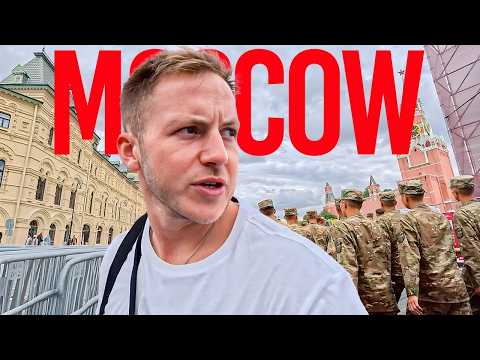
I Ignored Western Media and Went to Russia 🇷🇺
Harry survives a five-hour FSB interrogation to explore Moscow — Red Square, the chandelier metro, a brutal banya, and dating culture with his Russian friend Valeriya.
Video
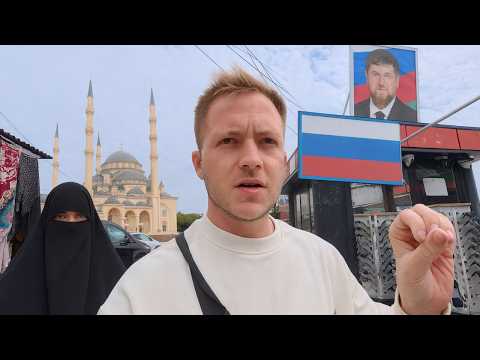
I Went to the Most Feared Place in Russia - Chechnya 🇷🇺
The drive from Kalmykia to Grozny and a day in the Chechen capital — a city rebuilt from rubble, alcohol-free, silent markets, and the place Russians themselves refuse to visit.

Video
Entering the Side of Russia You Don't Ever See 🇷🇺
An 18-hour third-class train from Moscow to Volgograd, then a hitchhike across the steppe to Elista — with an hour of being ignored and sworn at that nearly proved the stereotype.