Place
Elista
The capital of Kalmykia and the only Buddhist republic in Europe — descendants of a Mongolian tribe deported by Stalin, Europe's largest Buddhist temple, camels, and salted butter tea.
Elista
The capital of Kalmykia in southern Russia, and the reason for the whole trip: Harry’s framing is that it is the only Buddhist republic in Europe, and a place most travellers — and most Russians — have never heard of.
He reaches it by hitchhiking from Volgograd across the steppe, which he describes as flat, empty and almost desert, with no wildlife and nothing to look at for hours. His host is Valentina, who used to be his next-door neighbour in Bali.
First impressions
The landscape barely changes on the way in. Everything else does:
- The people look completely different — Harry’s comparison is Mongolia, and he notes the absence of the Orthodox, Caucasian Russians he had been among until then.
- Development is visibly lower than in Volgograd, and far lower than Moscow.
- It is Buddhist, which makes it unlike anywhere else in Europe.
- It is quiet, and Soviet in layout and architecture.
Who the Kalmyks are
- Descendants of the Oirats, a nomadic Mongolian tribe who migrated as far as Russia and were known as fierce fighters.
- The Tsars used them against the threat from the Ottoman Empire, and granted them citizenship in return.
- Stalin deported the entire people to Siberia, accusing them of siding with the Nazis — an accusation Harry says he doesn’t believe. They were put on trains with no food and no idea what was happening; the journey took a week and many died on it.
- Only about 100,000 came back after Stalin’s death.
- Around 300,000 Kalmyks today, of whom roughly 70% are Buddhist.
- A monument in the centre marks the repression, with one of the deportation carriages standing beside it.
The republic now
- Among the poorest in Russia. Valentina’s own summary is that Kalmykia produces nothing; Harry adds that you won’t see much visible poverty but that opportunity is the thing missing.
- Brain drain is the threat to the culture, not politics — the young leave for Volgograd and Moscow for work, and Valentina counts herself among them.
- The 1990s were dangerous for Kalmyks in Moscow, when nationalist skinheads attacked them. Valentina’s relative was beaten, left paralysed for ten years and died three years before filming. Her view is that Moscow is more open now, and that a Russian passport and good Russian are what settle the question.
- Winter reaches −30°C, which Harry offers as part of the explanation for the reserve people show strangers.
- Number plates carry the region code — 8 is Kalmykia.
- Enlistment is one of the few ways to earn. Driving out of the republic Harry passes a recruitment billboard and says, carefully and without naming the conflict, that people sign up to support their families and buy their parents a house — in a culture where children are expected to support their parents rather than the reverse.
- The pink lake is not pink. One of Kalmykia’s advertised natural features, and Harry’s verdict on pink lakes anywhere — pink for about two days a year, and mostly in the edit.
The Golden Temple
The largest Buddhist temple in Europe, and the first thing Valentina shows him. It was renovated rather than newly built, with heavy investment from the Lama. Visitors turn the prayer wheels, which hold mantras inside; white and yellow are worn as a mark of respect and stand for Kalmyk culture.
A Soviet flat
Valentina’s grandmother’s flat, in the block where three generations grew up, and the most useful domestic detail in the Russia cluster:
- The flat was given by the government about 47 years earlier, when her daughter was born.
- Bathroom and toilet are separate rooms, which Harry has never seen and which is normal here — his hosts find the Western arrangement equally odd.
- The courtyard between the blocks was where all the children of four buildings played together, before the internet.
- Bring gifts: vodka, sweets and sausage is the standard combination — see bring gifts for hosts.
- Guests are fed on arrival, soup and tea, and refusing food is rude.
- Three shots is what a man is expected to drink.
Her grandmother taught for over 50 years — including how to handle a gun — was born in Siberia in 1949 and left in 1957, speaks some German, and remembers the USSR with affection. Asked for one good thing about life here, she says family. Asked for advice for two unmarried men, she says that when you feel the lightning, you’ll know.
Nomad things to do
Billed as the number one tourist activity in Kalmykia, and run by Valentina’s family on no notice:
- A yurt, put up from scratch in about an hour and a half — by the women, while the men, Harry is told, drink vodka.
- Camels, the two-humped Bactrian sort, the extra hump being fat for endurance. The babies are five months old.
- Archery.
The nomadic life itself is long finished. What Valentina says survives from it is a tolerance for long journeys and rough conditions.
Kalmyk food
Harry’s description is what you’d get if Mongolia and Russia had a child.
- Kalmyk tea — green tea boiled with milk, salt and butter, and his favourite thing he ate.
- Dumplings, and a broth he compares to a Mongolian borscht.
- Sheep testicles, and sheep intestine soup.
- The local lemonade, which he rates above everything else on the table.
It is cantina-style: take a tray, take bread and dessert, order from the kitchen. The food is deliberately calorific, a nomad inheritance that Valentina notes doesn’t suit a settled modern life. Her family paid for all of it and would not let Harry pay for anything all day.
What Harry concludes about Russians
The most careful thing he says in the cluster, and he says it both ways.
The preconception was that Russians are cold. His verdict is that it is true — they are not the friendliest people he has met, and he isn’t going to pretend otherwise. But he separates coldness from unkindness: there is a barrier, they have been through a great deal, they get very few foreigners, the winter is months long, and wariness toward outsiders is normal in most of the world. Comparing them with Filipinos or Indonesians, who live on tourism, isn’t a fair test.
Valentina’s version is the one that completes it: Russians are slow to trust and then trust permanently, and they are direct — you will never be shown a face put on for your benefit.
Leon’s closing line, which Harry endorses: never confuse politics with people. Harry’s own is that if you had been born there you would be like the people there, so most of what anyone thinks about a country is worth dropping.
Harry’s tips
- Bring vodka, sweets and sausage to anyone’s home.
- Eat what you’re given, and expect three shots.
- Don’t read reserve as dislike. It’s a barrier, not an opinion, and it comes down once.
- Go for the minority republics. Harry’s point is that Russia has 190 ethnic groups and this is one of them — the diversity is the thing nobody expects.
Source
- Entering the Side of Russia You Don’t Ever See 🇷🇺 — https://www.youtube.com/watch?v=OgY_LeUShM8
- I Traveled to the Russian Republic No Tourists Visit 🇷🇺 — https://www.youtube.com/watch?v=5W7JY6CKw08
- I Went to the Most Feared Place in Russia - Chechnya 🇷🇺 — https://www.youtube.com/watch?v=mcDuqVPzdfY (the drive out of Kalmykia)
Videos featuring Elista

Video
I Traveled to the Russian Republic No Tourists Visit 🇷🇺
A day in Kalmykia with a Kalmyk host — Europe's largest Buddhist temple, a Soviet flat and a grandmother born in Siberian exile, camels on the steppe, and Harry's most careful verdict on Russians.
Video
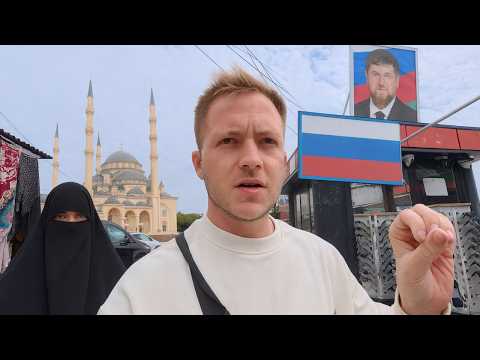
I Went to the Most Feared Place in Russia - Chechnya 🇷🇺
The drive from Kalmykia to Grozny and a day in the Chechen capital — a city rebuilt from rubble, alcohol-free, silent markets, and the place Russians themselves refuse to visit.

Video
Entering the Side of Russia You Don't Ever See 🇷🇺
An 18-hour third-class train from Moscow to Volgograd, then a hitchhike across the steppe to Elista — with an hour of being ignored and sworn at that nearly proved the stereotype.
Linked from
- Grozny Place
- Volgograd Place
- Stick a thumb out Tip
- A government and its people are not the same thing Tip
- Leon Person
- Valentina Person
- Vasili Person