Tip
A government and its people are not the same thing
Harry's stated reason for going to countries with bad reputations — the state's behaviour tells you nothing about whether its citizens will welcome you, and usually the opposite.
A government and its people are not the same thing
The single sentence Harry repeats most often across the bundle, and he uses it in two directions. Before a trip it is the argument for going: whatever a government has done, the people living under it are a separate question, and travelling on the assumption that they are the same thing rules out most of the world. After a trip it is the conclusion, because the hospitality he meets is usually strongest in exactly the places whose governments are in the headlines.
It overlaps with judge a place for yourself and is not the same rule. That one is about testing a reputation by going. This one is about who the reputation actually attaches to — and Harry uses it as a caveat as much as an argument, because it is also how he avoids implying that a warm welcome amounts to a defence of the state running the place.
How Harry applies it
In Afghanistan he says it while describing the hospitality as the standout of the trip: five dinner invitations in a day in Kandahar, meals and beds offered by strangers and by Taliban soldiers, and he calls Afghans among the most hospitable people in the world in the same breath as insisting that this is not a statement about the people governing them. The economic half of the same point is on that page too — sanctions land on the population and not the government.
In Lagos it is the last thing he says. After a day of constant requests for money, a rock thrown at him and a crowd closing in, his closing thought is that there are good and bad people everywhere, that you should ask what it is like to be in the other person’s shoes, and that you have to look at the system rather than the people inside it.
He also uses it defensively, as a disclaimer read at the top of a video rather than a conclusion at the end — in Crown Heights, New York, he opens by saying that a government and its people are two different things and that what follows is about a religion and not about current politics.
Demonstrated in
- 7 Days in the Most Dangerous Country in the World 🇦🇫 — the version he gives as a reason to go at all.
- First Time in the Home of a Hasidic Jewish Family 🇺🇸 — the same sentence used as an up-front disclaimer.
- Inside Nigeria’s Most Dangerous City 🇳🇬 — the closing line of the hardest day in the Nigeria cluster, aimed at his own viewers as much as at the country.
- I Visited Nigeria’s Biggest City (Avoid These Men) 🇳🇬 — the case for the rule made by the people it’s about. Marina Market sellers tell Harry unprompted that Nigeria has every resource it needs and that the leaders take them, and his answer is that he would feel exactly the same.
- I Traveled to the Russian Republic No Tourists Visit 🇷🇺 — the sharpest formulation of it, and it isn’t Harry’s. Asked for a closing thought in Elista, Leon says: never confuse politics with people. Harry endorses it as the number one lesson and adds his own — if you had been born there, you would be like the people there.
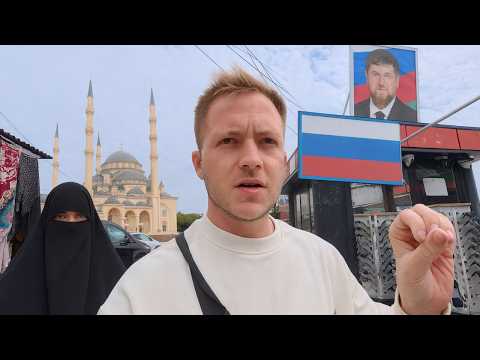
- I Went to the Most Feared Place in Russia - Chechnya 🇷🇺 — the sign-off he gives to a Russian audience as much as a foreign one: there’s a difference between the people and the government, not all the headlines are true, and sometimes you have to come and find out for yourself.
- I Visited the World’s Most Controversial Country 🇮🇱 — where he says it in the opening minute and adds that he thinks it is especially true here. What makes this the page’s most demanding entry is that he then has to apply it in both directions at once, in a place where every person he interviews holds someone else’s government responsible. His method is to let each of them speak at length and adjudicate none of it, and his summary is that the world is not black and white but grey.
- I investigated illegal Israeli settlers in the West Bank 🇵🇸🇮🇱 — the entry where Harry doesn’t say it at all, and doesn’t need to, because both interviewees apply it to each other. The Israeli settler, asked to condemn violent settlers, calls them a small group and separates them from herself and from what she takes Jewish practice to be. The Palestinian driver, unprompted, says the settlement beside his village is peaceful and the trouble is further north, that his own fingers aren’t the same as each other, and that Jewish people’s real quarrel is not with Palestinians. Every earlier entry has a local drawing the line around his own government; this is the first with people on opposite sides of a war drawing it around each other’s.
- I Ignored Western Media and Went to North Korea 🇰🇵 — the limit case, and worth having on the page for that reason alone. In North Korea the rule has to do all its work at once: he cannot verify most of what he is shown, he films people switching into a scripted register the moment a camera appears, and he says as much on camera. The distinction survives anyway, because he applies it to the only thing he can actually vouch for — the people he met were warm to him — and claims nothing beyond it.
Videos featuring A government and its people are not the same thing

Video
30 Days Travelling USA - American Dream or Failure? 🇺🇸
The road-trip summary of a three-week American trip — Venice Beach, a campervan to Vegas, a 20,000-calorie burger, the Sphere, the Trump trial crowds, a Brooklyn food tour and a $1,000 night at the Plaza.

Video
I Traveled to the Russian Republic No Tourists Visit 🇷🇺
A day in Kalmykia with a Kalmyk host — Europe's largest Buddhist temple, a Soviet flat and a grandmother born in Siberian exile, camels on the steppe, and Harry's most careful verdict on Russians.

Video
I Ignored Western Media and Went to North Korea 🇰🇵
Day two in Pyongyang — a tracksuit bought back-to-front, the national library's intranet, a Kim Jong-un haircut, state vertical farms, and a marathon that buys him the only unescorted hours of the trip.

Video
I Visited Nigeria's Biggest City (Avoid These Men) 🇳🇬
Marina Market on Victoria Island — men who demand payment to film and claim to be officials, a tailor who makes an outfit in a day, and a shoe cleaner who doesn't know his own age.

Video
Inside Nigeria's Most Dangerous City 🇳🇬
A day in Lagos's Oshodi Market and on the live train tracks beside it — constant requests for money against a $27 monthly wage, a swarming crowd, and a rock thrown at him.
Video
I Went to the Most Feared Place in Russia - Chechnya 🇷🇺
The drive from Kalmykia to Grozny and a day in the Chechen capital — a city rebuilt from rubble, alcohol-free, silent markets, and the place Russians themselves refuse to visit.

Video
I Ignored Western Media and Went to Mogadishu, Somalia 🇸🇴
Two days in Mogadishu with armed security — a beach where 37 people were killed a month earlier, a fish market selling shark and turtle, a school for deaf and blind children, and a reformed pirate he isn't allowed to ask about piracy.

Video
First Tourist in North Korea’s Capital After 5 Years 🇰🇵
Getting into a country that is still closed, by registering as a marathon runner — then two days of Pyongyang on a guided itinerary, including the metro encounter that the guides visibly stage.

Video
I Visited the World's Most Controversial Country 🇮🇱
Five hours of airport questioning, then a week of interviews across the political range in Tel Aviv and a tense afternoon in Jerusalem's old city — Harry's stated method is to listen to everyone and pick nobody.

Video
I investigated illegal Israeli settlers in the West Bank 🇵🇸🇮🇱
A day with an Israeli settler and then a day with a Palestinian driver in Bethlehem — the same land explained twice, plus the clearest account in the bundle of gates, ID colours and permits.
Linked from
- Lagos Place
- North Korea Country
- Palestine Country
- Expect a script on camera Tip
- Talk to both sides Tip