Place
Kandahar
The Taliban's birthplace and headquarters, and the city Harry calls both the most intense and the kindest he has been to — Pashtun hospitality, a nomad camp, and a flour mill worked by hand.
Kandahar
Southern city in Afghanistan where the Taliban movement was founded in the 1990s and where its leadership is based — “Taliban everywhere”, in Harry’s words, and the most intense stop of his week. It is also one of the oldest continuously settled places in the world, and Harry’s verdict after a full day in it is that it is simultaneously the most intense city he has been to and the kindest.
The Pashtun south
Kandahar is Pashtun, and that shapes everything Harry records here.
- Hospitality is the defining trait, and it is a formal obligation rather than a mood: the guest is treated as God, and loyalty runs to the tribe. A butcher with no tea in the shop went out and bought some rather than not offer it.
- The Taliban are all Pashtun — Harry is told you have to be Pashtun to be a member.
- You cannot easily tell who is Taliban. Everyone here wears the Pashtun hat that usually identifies them elsewhere; the guns are the only reliable tell.
- Far more conservative than the north. There are no women on the streets at all, where in northern cities you see them.
- Faces vary enormously — Harry points out people who read as Indian, Pakistani, Iranian, Central Asian, and some who he says look English, which is why he is regularly taken for Afghan.
- The language changes with the region: Persian in the north, Pashto here.
What the day looks like
- Mud-walled houses with flat roofs, uncovered sewers, and a dry desert heat — the visual he keeps reaching for is a film set.
- A crowd forms wherever he stands still for more than a minute. His method is simply to keep moving.
- Gifts are pressed on him constantly: sugar cane, tea, and a ring from a jeweller who flatly refused payment for it.
- Ice is stored under insulation rather than refrigerated, which is how it survives the heat.
- Naswar, a legal tobacco snuff held under the tongue, is offered free. He’s warned first-timers feel sick from it. It stings immediately.
- Military walls and watchtowers are everywhere and he films none of them — filming them gets you in trouble.
Children and work
The hardest material on the page, and Harry doesn’t soften it.
- A madrasa student he speaks to studies only religion — no maths, no science, no English, no computing — knows the Quran by heart, and says he wants to be a mujahid when he grows up. Harry’s reaction on camera is that the child has never been taught anything else.
- Children under ten have been working all day, which he reads off their faces at a trampoline park in the evening.
- A boy at the flour mill works for his uncle and does not go to school.
- Most people cannot read or write in any language, which Harry gives as the measure of the education system.
At the trampoline park he paid 500 afghani — about £5 — so that every child present could get on. The boys pushed to the front, so he asked the owner to let the girls on next, and did not film them. He also objected on camera to the owner whipping the children to clear the trampoline, and says plainly that he does not agree with it.
The nomads
On the city’s outskirts, a camp of nomadic Afghans — Harry didn’t know the country had any until his guide told him. He is received by the head of the tribe in a clay-built, covered house that stays cool in the heat, floored with rugs and cushions, with a goat pen and a mosque under construction alongside.
What he is told:
- There is no plan for a day. They go out and find out what they earn.
- Land disputes happen often when someone claims the ground they’ve stopped on.
- The children don’t go to school — his guide’s translation is that they don’t see the worth of education.
- They have no expectations of the future and describe themselves as content with a simple life.
- Marriages are arranged, within the tribe.
Asked what his own life is like, Harry answers that he was lucky to be born where he was, that he counts it daily, and that the reason he films in Afghanistan is to change the perception that it is dangerous — because tourists bring money to people like his host. He left about $100.
The flour mill
Wheat tipped in by hand and flour out the other end, with almost no machinery anywhere in the process.
- A sack is 49 kg and sells for around 1,700–1,800 afghani, about $22.
- A 72-year-old is doing the manual labour, and not complaining, in the heat. Harry’s line: most people in the West have retired at that age.
- His observation about it: people here are too busy to think about happiness at all — it doesn’t enter the equation.
Other stops
- The tomb of a Muslim saint on the outskirts — Harry is told he performed miracles comparable to Jesus’s — heavily decorated, in the mountains, and very peaceful.
- A destroyed government guest house, formerly a popular place to stay outside the city, wrecked by a suicide bombing and now rubble.
- Roadside juice: pomegranate pressed by hand and sugar cane through a machine with a Taliban flag on it, sold by the same man. Sugar cane is very sweet, pomegranate sour, and he rates the pomegranate.
- NFC, the Afghan version of KFC, where the thing to order is mantu — dumplings with yoghurt and tomato, which he calls the best dumpling he has ever eaten.
- A Taliban group invited his party over, and one member refused to shake his hand on learning he isn’t Muslim — the only genuinely bad experience of the trip. Harry chose honesty over the advice to claim he was Muslim. Minutes later a local invited him home for dinner, the fifth invitation that day.
The verdict
Harry’s conclusion, given at the end of the day after a stranger at the next table bought him a drink: he has been to 40 countries, and Afghanistan is number one in the world for hospitality — explicitly knocking Pakistan off the top.
Harry’s tips
- Go with a guide who knows the local dynamics (see travel with a local guide) — this is not a wing-it city, and the nomad visit and every translation here depended on one.
- Keep moving. A stationary foreigner draws a crowd within a minute.
- Don’t film the military installations, and don’t film women or girls.
- Expect intensity and don’t take individual rudeness as the measure of the people.
- Say yes to the tea. Refusing costs more than the ten minutes.
Source
Videos featuring Kandahar

Video
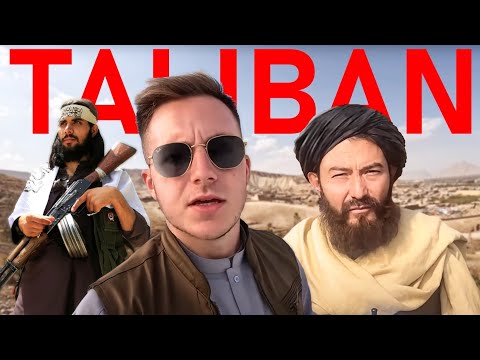
Inside the Taliban's Most Notorious City (Afghanistan) 🇦🇫
A full day in Kandahar — a madrasa student who wants to be a fighter, a trampoline park Harry buys out for the local children, a nomad camp, and a flour mill worked by hand at 72.
Video
7 Days in the Most Dangerous Country in the World 🇦🇫
Harry spends a week travelling Taliban-ruled Afghanistan — Kabul, Mazar-i-Sharif, Kandahar, and Bamiyan — testing whether the country matches its reputation.
Linked from
- Kabul Place
- Afghanistan Country
- Don't point the camera at private moments Tip
- Keep moving Tip
- A government and its people are not the same thing Tip
- Travel with a local guide Tip
- Muhammad Jan Person