Country
Afghanistan
Harry's observations from a week under Taliban rule — safety with a guide, filming rules, extraordinary hospitality, and life under restrictions.
Afghanistan
Harry spent seven days in Taliban-ruled Afghanistan in 2023 — Kabul, Mazar-i-Sharif, Kandahar, and Bamiyan — to test its “most dangerous country in the world” label against reality.
Observations
From 7 Days in the Most Dangerous Country in the World 🇦🇫
- Safety: Harry felt safe throughout and says the country is travelable if you follow the rules and have the correct guides — his guide booked everything and defused his one dangerous misunderstanding (see travel with a local guide). No embassy support exists if things go wrong.
- Filming rules: never film women — even appearing to can bring a Taliban confrontation; checkpoints are also off-limits. Filming yourself is fine. Don’t linger in one spot too long.
- Hospitality: the standout of the trip. Strangers and even Taliban soldiers offered meals and lodging; in Kandahar Harry got five dinner invitations in a day. He calls Afghans among the most hospitable people in the world — while stressing that a government and its people are not the same thing.
- Life under the Taliban: music and TV banned, beards expected of men, girls barred from school beyond age 13, face coverings for women — enforced unevenly; in Bamiyan women run the country’s only women’s market.
- Economy: sanctions hit the people rather than the government; child labour is widespread in markets; an unemployed returnee told Harry he’d take any job at all. Many young people, including college students, said they would leave the country if they could.
- Money and costs: a goat cost about $40 (4,000); a Buddhist stupa charged 500 entry, maybe $5–10 (from video – unverified); a baby swing was 2,000 (from video – unverified).
- Dress: the shalwar kameez is universal; wearing one helps a visitor blend in.
- History and terrain: waves of invaders — British, Soviet, American — all failed here; the mountainous terrain and complex ethnic mosaic (a population of some 40 million across many ethnicities) make the country effectively unconquerable, and its Silk Road past left Buddhist stupas, cave systems, and the Bamiyan Buddhas.
From Inside the Taliban’s Most Notorious City (Afghanistan) 🇦🇫
- Hospitality now ranks first in the world, on Harry’s own count of 40 countries — explicitly ahead of Pakistan, which had held the position. The measure he uses is that people who have almost nothing refuse payment: a jeweller who gives him a ring, a butcher who goes out to buy tea he doesn’t stock, sellers who won’t take money for what he consumes.
- The Pashtun south is a different country from the north. Not a woman on the street in Kandahar; hospitality as a formal obligation rather than a mood, with the guest treated as God; and the Taliban drawn entirely from Pashtuns.
- Madrasa education is religion only — no maths, science, English or computing — and produces students who know the Quran by heart and nothing else.
- Most people cannot read or write in any language.
- Child labour is normal and visible. Children under ten who have worked a full day, and boys at the flour mill who don’t go to school because the family needs the work.
- Afghanistan has nomads, which Harry didn’t know: tribes in clay-built camps, earning day to day with no plan, disputing land with whoever claims it, not schooling their children, and describing themselves as content.
- Manual labour goes on into old age — a 72-year-old working the flour mill in desert heat.
- Wages, for scale: 500 afghani is a full day’s pay for a street seller; a 49 kg sack of flour sells for about $22.
- Languages split by region: Persian in the north, Pashto in the south.
- Naswar, a tobacco snuff held under the tongue, is legal and freely offered.
- Never film the military walls or watchtowers, which are everywhere, and never film women or girls.
From $1000 USD Street Shave in Kabul, Afghanistan 🇦🇫
- The afghani is a closed currency. You cannot buy it outside the country; you change dollars with a man at a table on the street, and you count it before you walk away.
- Daily wages, from people Harry asks directly: a highway barber makes $1-3 a day on about four customers; 33,000 afghani (roughly $500) is more than such a man could collect in a year, per Harry’s guide.
- Prices: a shave 50 afghani, about 50 cents. A ring in the Kabul jewellery quarter, $20 — and then offered free.
- Ask for a clean blade. Barbers here rarely do clean shaves at all, because men are expected to grow beards.
- Checkpoints are constant and uneventful — passports checked several times a day, sometimes questions, and Harry reports no trouble at any of them.
- Traffic has no rules: no lanes, pedestrians crossing through moving cars, vendors working the roundabouts.
- Pomegranate juice is the national recommendation, and it varies by region — Kabul’s is sweeter, from Mazar-i-Sharif fruit; Kandahar’s is local and sourer.
- Giving money in public draws a crowd immediately, and Harry is candid that it becomes impossible to do fairly. His stated rule under that pressure is that he pays people who work and who quote an honest price, not people who ask.
Obs: in a later video filmed in Turkey, Harry says he does not expect to be able to return to Afghanistan while the current government is in power, because of comments he made in an interview with Piers Morgan — and that he intends to go back one day. The Afghanistan pages here are therefore unlikely to gain further sources for now.
Videos featuring Afghanistan

Video
$1000 USD Street Shave in Kabul, Afghanistan 🇦🇫
A day on Kabul's streets — street money-changing, a 50-year-old box camera, a 50-cent highway shave from a barber earning a dollar a day, and $1,000 given away.

Video
Inside the Taliban's Most Notorious City (Afghanistan) 🇦🇫
A full day in Kandahar — a madrasa student who wants to be a fighter, a trampoline park Harry buys out for the local children, a nomad camp, and a flour mill worked by hand at 72.
Video
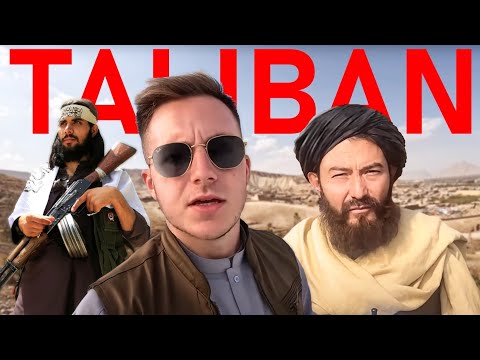
7 Days in the Most Dangerous Country in the World 🇦🇫
Harry spends a week travelling Taliban-ruled Afghanistan — Kabul, Mazar-i-Sharif, Kandahar, and Bamiyan — testing whether the country matches its reputation.
Linked from
- Bamiyan Place
- Kabul Place
- Kandahar Place
- Mazar-i-Sharif Place
- A government and its people are not the same thing Tip
- Travel with a local guide Tip
- Muhammad Jan Person