Tip
Talk to both sides
In a contested place, interview across the whole range and adjudicate none of it — and expect each side's warnings about the other to be the first thing disproved.
Talk to both sides
The method Harry states out loud before filming anywhere contested: speak to everyone — both nationalities, the religious communities, the people whose politics he finds hardest — let each of them talk at length, and don’t rule on any of it. He is explicit that this pleases nobody and that he expects to be attacked from every direction for it.
It is a working method rather than a moral position, and it earns its place because of what it reliably produces: each side’s warnings about the other are the first thing the trip disproves. He goes in having been told by Israelis that Palestinians will kill him and by Palestinians that Israelis will kill him, and the test of the rule is what actually happens on the road.
Related and not the same: judge a place for yourself is about testing a reputation by going, and a government and its people is about who a reputation attaches to. This one is about how many people you have to ask before you have anything worth saying, and about not resolving it for the viewer afterwards.
How Harry applies it
He says the method before he uses it. At the top of the Israel video he sets out who he intends to speak to — Israelis, Palestinians, settlers, religious communities — and commits to presenting the range without picking a side. The result is a video in which every interviewee holds someone else’s government responsible, nine or ten positions are recorded in full, and none is adjudicated. His only summary is that the world is not black and white but grey.
The advice also comes back at him from inside. An Israeli he meets over breakfast in Jerusalem — four years in the army, on his fourth reserve call-up — tells him unprompted to go and visit the West Bank, because there are extremists on both sides and he should see both. That is the strongest form the rule takes: it is not a foreigner’s neutrality, it is what someone with everything at stake recommends.
And then the road settles it. Cycling from Jerusalem to Bethlehem, warned by each side about the other, he gets a puncture on a hillside with an hour of light left. Two Israeli men stop within minutes; one drives him somewhere quiet, changes the tyre, and refuses the $30 he offers, saying they do good deeds around here. He then crosses into Palestine and is met, in his words, with nothing but kindness. Both warnings were sincere, and both were wrong.
Demonstrated in
- I Visited the World’s Most Controversial Country 🇮🇱 — the method stated as a method, applied across the political range in Israel, and deliberately left unresolved.
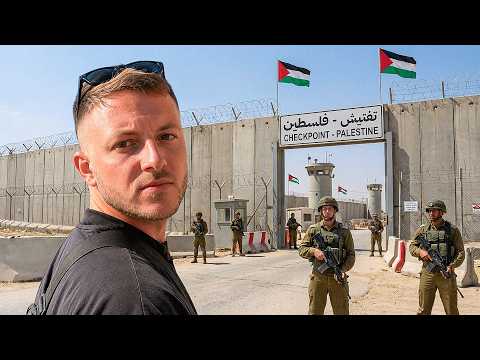
- I Was Warned Not to Cross Into Palestine 🇵🇸 — the same rule as the structure of a single day: the symmetrical warnings, the Israelis who stop for him on the way into the West Bank, and the Palestinian hospitality on the other side of the wall.
- I investigated illegal Israeli settlers in the West Bank 🇵🇸🇮🇱 — the version where nothing is disproved, which is why it belongs here. The video is built as a matched pair: half a day with an Israeli settler, half a day with a Palestinian driver, the same hills and roads explained twice. Unlike the puncture on the Jerusalem road, no warning collapses on contact — both accounts survive intact and are irreconcilable, and Harry still declines to rule. What the method produces here is not a corrected assumption but a pair of positions the viewer has to hold at once, and the only thing he adds at the end is how close the two are physically and how far apart their realities are.
Videos featuring Talk to both sides
Video
I Was Warned Not to Cross Into Palestine 🇵🇸
A day in the old city of Jerusalem — Western Wall, Al-Aqsa, Holy Sepulchre, the invisible Green Line — and then a rented bike, 10 km south to Bethlehem, through a checkpoint, a wrong detour and a puncture.

Video
I investigated illegal Israeli settlers in the West Bank 🇵🇸🇮🇱
A day with an Israeli settler and then a day with a Palestinian driver in Bethlehem — the same land explained twice, plus the clearest account in the bundle of gates, ID colours and permits.