Place
Bethlehem
The birthplace of Jesus, 10 km south of Jerusalem behind an 8 m wall — a city built to live on tourism that has had none for two years, and the graffitied wall that is now its main sight.
Bethlehem
A city in the West Bank, Palestine, 10 km south of Jerusalem — the birthplace of Jesus, and the start of the Bethlehem-to-Hebron ride Harry does the following day.
He arrives on a rented bicycle, at dusk, after a checkpoint, a wrong detour and a puncture.
Getting there from Jerusalem
- 10 km on paper, considerably more in practice. He calls it the hilliest place he has ever been, underestimates it badly, and says so.
- The wall. Harry gives it as 8 m. He first meets it circling the city without an obvious way in.
- The checkpoint is the hard part, and not for security reasons. Guards directed him onto a driving route that added 6 km; a taxi driver told him he could walk through instead. The walk-through turned out to be pedestrian only, so he couldn’t take the bicycle, and did the 6 km anyway. He deliberately didn’t film any of the crossing.
- A different road in has no checkpoint at all — he ends up entering with nothing to cross and no security, and is candid that he isn’t sure which administrative zone he is in.
- A rented bicycle is not a neutral object here. He hired it in Jerusalem and didn’t say where he was taking it.
What it’s like
- It does not feel like a border, it feels like a different region. Lebanon, Syria, Egypt — he says that if you dropped him in the street he wouldn’t know he had crossed anything.
- More developed than he had been led to expect. Clean streets, good restaurants, cars he wasn’t told to expect; he compares it to Beirut and says outright that the picture painted for him was wrong.
- The other side of the wall is graffiti and cameras, and he can’t shake the film-set quality of it.
Tourism, and the absence of it
The fact the page exists for: a city that lives on tourism and has had none for two years.
- Bethlehem was not built for tourism, in his framing — it lives off it. The infrastructure is all still there and the visitors are not.
- His hotel: $50 for what he rates as a very nice four-star, family-run place — a Christian family, he thinks — with zero tourists since October 2023. He puts the name and location in the video description rather than keeping it to himself.
- What he says the coverage misses: not the deaths, which are reported, but the businesses with no income and the jobs lost by people who had nothing to do with any of it and simply live here.
The second visit: the wall, and the city around it
From I investigated illegal Israeli settlers in the West Bank 🇵🇸🇮🇱, where Bethlehem is the base for a full day rather than an arrival at dusk.
- The wall is the city’s edge and its main sight. Concrete about 8 m high, covered in graffiti — some by well-known artists including a Banksy piece, most of it by visitors — and he walks it up and down with the place entirely to himself. He says two things about standing there that sit oddly together: that it feels like being in a prison camp, and that he feels extremely safe.
- The watchtowers are manned. Every several hundred metres, permanently, with cameras. He waves at one.
- The gates are outside the city. Driving out toward the settlements, the roads into the surrounding villages are gated, and since 7 October the gates are shut — turning a one-minute drive into four or five kilometres. Details on the Palestine page.
- Lunch in a family home above the city, with a mosque next door and a view over the whole region. The room is Harry’s observation as much as the meal: sofas around the walls rather than facing a television, because it is built for gatherings, and he contrasts it with the four-person households he grew up around. The food is a home-cooked beef dish in a tomato sauce with green beans; he can’t retain the name.
- A settlement sits beside the neighbouring village, and the Palestinian driver’s verdict on that particular one is that it is peaceful — the trouble, he says, is further north.
Tourism, two years on
The state of the thing the city lives on, updated from the second visit:
- Still nothing. Hotels and guides have become taxi drivers; Harry names that turnover as the loss the coverage misses.
- The people who worked in tourism are competing for the same fares. The driver who takes him round lost his social-media following during the war and is rebuilding from zero, and what he asks Harry for is not money but future business.
- Harry’s recommendation is unambiguous: come to Bethlehem, it is safe, and it is one of the most welcoming places he has been. He puts the contacts of the drivers and guides in the description and asks viewers to use them.
- He also spends $1,000 on food and supplies for families in a local refugee camp, with a Palestinian friend who closed his shop for the day to help, and says the hardest part was deciding who to give it to.
Harry’s tips
- Ask someone who drives for a living. The security guards’ answer cost him 6 km; the taxi driver’s answer was the right one. See also talk to both sides for the same instinct applied to opinions rather than routes.
- Don’t film the crossing. His own words, and he doesn’t elaborate.
- Spend the night, and spend the money. The hotels and restaurants are the part of the economy with nothing coming in, and he treats staying in one as the useful thing a visitor can actually do.
- Leave more daylight than you think you need. The detours are not predictable, and he finishes the ride in the dark.
Source
Videos featuring Bethlehem
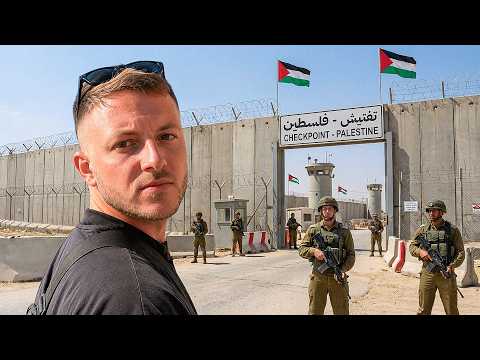
Video
I Was Warned Not to Cross Into Palestine 🇵🇸
A day in the old city of Jerusalem — Western Wall, Al-Aqsa, Holy Sepulchre, the invisible Green Line — and then a rented bike, 10 km south to Bethlehem, through a checkpoint, a wrong detour and a puncture.

Video
I investigated illegal Israeli settlers in the West Bank 🇵🇸🇮🇱
A day with an Israeli settler and then a day with a Palestinian driver in Bethlehem — the same land explained twice, plus the clearest account in the bundle of gates, ID colours and permits.