Place
Peshawar
Pakistan's oldest city, on the Afghan border and on the UK's do-not-travel list — and the place Harry rates the kindest he has been, where strangers pay his bills and refuse to be repaid.
Peshawar
A city of around two million in the north-west of Pakistan, close to the Afghan border, and by Harry’s account the oldest in the country — he dates it to 500 BC. Small by Pakistani standards, spread out, low and brick-built, and historically the point where the routes from Afghanistan and Central Asia arrived.
It is also on the UK government’s list of places British travellers are advised not to visit, on the basis of serious extremism problems that Harry places five to ten years before his visit. He states this only once he is already walking around, and the rest of the video is the answer: he leaves calling it the friendliest city in Pakistan, with apologies to Karachi, Lahore and Islamabad, and the kindest he has been anywhere.
What Harry did
Arrived by tuk-tuk with no plan, walked the Storytellers’ Market, bought sunglasses, was recognised by a subscriber who took over his afternoon, ate beef pulao and drank pomegranate juice without being allowed to pay for either, visited the mosque, and was driven to a barber by a stranger who paid for the haircut and left.
On a second day he worked Sadar Bazaar, took the BRT with no destination in mind, and finally tracked down the street massage he’d been asking strangers about since he arrived.
Qissa Khwani — the Storytellers’ Market
The old bazaar, and the name is the history. Traders came through from Central Asia via Afghanistan, entering by the Kabuli Gate — named for Kabul — did business through the day, and spent the evenings in the tea shops resting, meeting other travellers, and exchanging routes, conditions and stories over a cup. That is where the name comes from.
It now sells camouflage and army surplus, jackets, bags, watches, clocks, rings and wallets down thin streets between tall buildings — Harry’s description is of having walked back a hundred years. There is also a square commemorating protesters shot dead by British troops, marked annually; his guide gives two different years for it in the same breath (from video – unverified), and a 1902 British-era building next door still carries a Union Jack.
Peshawar was the winter capital of the Afghan kings, who spent nine months here and three in Kabul because Kabul’s winters were too severe.
The oldest tea shop
Green chai brewed over coals in a flat pan with a little milk and sugar, served in small handleless cups, on the site where the storytelling actually happened. The upstairs terrace is the best vantage point over the bazaar — and the rooms above it still function as they did: about 100 rupees, roughly 25 cents, for a bed for the night, a little more for a private room. Men were asleep up there while Harry filmed.
Sadar Bazaar
The city’s biggest market, and large enough that Harry wanders between distinct quarters inside it: sweets and bakeries, women’s clothing, a mobile phone market, auto repair, TV repair, and a food section selling beef pulao, fish and sugarcane. The architecture is visibly old and the streets are dense.
What he bought there: a copy Adidas backpack, opened at 1,000 rupees and settled at about five dollars — with, he suspects, a guest discount folded in, since the sellers had shared their Coca-Cola with him earlier. A second seller undercut the first mid-deal, which he was uncomfortable enough about to offer to pay more so nobody lost out.
The street massage
Under a highway underpass, on a mat laid on bare cement, with oil and a queue of waiting customers. 500 rupees — about $2.50 — for 45 minutes, against the $60–80 the same would cost in Britain. The masseur works to a fixed routine through the back, legs, arms, head, ears and neck, does around eight of these a day at roughly five minutes of concentrated effort each, and is very strong. Harry’s description of the rhythm is five minutes of pain followed by five minutes of real pleasure, and he rates it against expensive massages he has paid properly for. The legs, done without oil, are the part the watching crowd enjoys most.
He paid $100 for it.
The food
Peshawar is where Harry settles his favourite food in the whole country.
- Beef pulao — the answer. Rice with chickpeas, raisins and very tender beef, aromatic rather than hot. The famous rice hall works out of around forty enormous pots, cooked off-site and carried in, weighed out on old scales and eaten upstairs in rows on benches; a plate runs a dollar or two and is portioned generously. What impresses him most is that the quality survives cooking at that volume. Bone marrow is available as the special order.
- Peshawari street breakfast — spinach, bread and lassi ladled from a churn filled by the seller’s own cows, eaten sitting in the street. Light, entirely home-produced, and served from a pitch the man’s father worked for sixty years before him. There is no fee to trade there.
- Sweet lassi with the works — butter, almonds, honey, walnuts, dried fruit and chunks of paneer, served in a metal mug to hold the cold, from a stall beneath the BRT station.
- Chapli kebab — the Peshawar dish, a patty formed and turned one-handed over an uncontrolled wood fire, 70 rupees or about half a dollar, normally eaten with paratha.
- Fruit and cream dessert — banana, apple, pomegranate, dates and almonds under syrup and cream, 160 rupees.
- Green chai in handleless cups, brewed over coals.
The soda house
Running since 1936, in a building said to be a couple of centuries old, and still hand-carbonating its own drinks: bottles loaded into a pumped CO2 rig with no electricity involved anywhere, not even in the fridge. Milk soda, pomegranate, lemon, orange and cola, at three for about half a dollar. The fizzy milk is the one to order for the experience; Harry had met it in Karachi but never this carbonated.
Getting around: the BRT
Peshawar’s bus rapid transit is the surprise of the trip. A ticket is 50 rupees. The stations are enclosed with platforms, screens and turnstiles and behave like a metro rather than a bus stop, the buses are articulated and air conditioned with a women-only section, and — the part that matters — they run on their own segregated road and miss the traffic entirely. Busy enough at rush hour to be standing room only.
If you have no internet, ask someone where the station is. Harry’s note is that locals beat Google Maps on this comfortably.
The people
The observation the video is built around, and he puts it bluntly: men here look intimidating — long beards, dark features — and are the kindest he has met. He is also honest about the moments in between. On one stretch near the mosque the street went quiet and everyone stared, and he genuinely wondered whether he should be filming, until one of the men called him over to ask where he was from. Older men are the most cautious, which he attributes to simply never having seen a tourist.
He is also fair about his own position in it. He knows a foreign guest with a camera is treated better than a local would be — but the thing he keeps coming back to is watching Pakistanis stop for each other’s flat tyres with no camera anywhere near, which is what makes the comparison with England stick.
Things that happened to him in a single day: a subscriber adopted him and insisted on buying lunch; a juice seller refused payment and was confused when Harry paid anyway; a stranger outside the mosque took his hand — a friendship gesture between men here, not otherwise — walked him through the market, drove him to a barber, paid for his haircut and disappeared before it started; food was handed out free in the mosque courtyard; and he dropped money on the floor more than once and had it returned by passers-by each time.
Practical facts
- English is poor here, noticeably worse than in Karachi or Lahore. The method is to wait for the occasional fluent speaker, who will then usually take charge of your day.
- Beef pulao: 300 rupees a plate, about $1.50, in a portion sized for two. Eaten upstairs, shoes off, cross-legged on the floor, with air conditioning.
- Pomegranate juice: 200 rupees, blended to order. The stall Harry used is a family business selling around 200 a day.
- Sunglasses: 300 rupees, after an opening price of 350 that the seller admitted included the tourist markup.
- A full barber visit — haircut, beard line, head massage and a three-layer facial — came to 1,000 rupees.
- The mosque dates from 1670 and is Mughal-era. It was under repair when Harry visited, with the central water tank drained. Filming inside was permitted when he asked.
- The city has a BRT bus line.
- Late autumn is warm here rather than cold, though the winters are not.
- A copy-brand backpack ran to about five dollars; a BRT ticket 50 rupees; a 45-minute street massage 500 rupees.
- Chai is drunk around three times a day in the households that invited him in, and made at home rather than bought.
- Sweet shops will feed you samples across the counter and then decline to charge you for any of it.
Harry’s tips
- Read the travel advice and then read its date. The extremism that put Peshawar on the UK’s list belongs to a decade ago — see judge a place for yourself.
- Learn some Urdu before coming. Harry promises on camera to be fluent next time and says it would improve the experience tenfold — see learn the local language.
- Expect to lose the argument about paying, and pay anyway — see insist on paying.
- Don’t read faces. The men who look most forbidding are the ones who call you over.
- Take the BRT. It’s cheap, modern, and on its own road, which in a Pakistani city is the whole argument.
- Find the underpass massage. Forty-five minutes for $2.50 from someone who has done it his whole life — see try the street version of everyday services.
- Eat the beef pulao. It is his single favourite dish in Pakistan and it is better here than anywhere else he tried it.
- Sit in the old tea shop rather than just buying the tea. The history of the bazaar is attached to the room, and the terrace is the best view of it.
Source
Videos featuring Peshawar

Video
Peshawar ULTIMATE Street Food Hunt 🇵🇰
A full day eating in Peshawar — street breakfast from a stall run for 60 years, forty pots of beef pulao, the city's oldest tea shop with rooms at 25 cents a night, and hand-carbonated fizzy milk from a soda house running since 1936.

Video
$100 Ridiculous Pakistani Street Massage 🇵🇰
A second day in Peshawar — Sadar Bazaar, free sweets and chai nobody will let him pay for, the city's modern BRT bus, and a 45-minute massage under a highway underpass that cost $2.50 and earned a $100 tip.
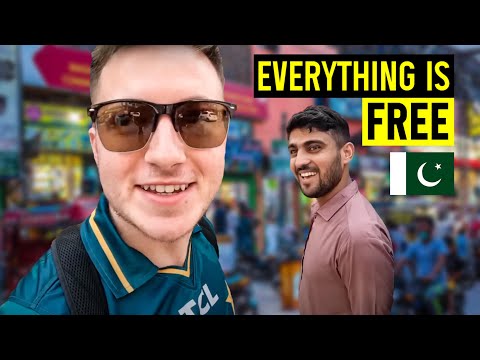
Video
The KINDEST City In The World?! 🇵🇰
Harry's first day in Peshawar — a city his own government advises against visiting — where a subscriber adopts him for the afternoon, nobody will take his money, and a stranger drives him to a barber and pays for his haircut before disappearing.
Linked from
- Lahore Place
- Pakistan Country
- Insist on paying Tip
- Judge a place for yourself Tip
- Learn the local language Tip
- Reward honesty and hard work Tip
- Try the street version of everyday services Tip