Tip
Ask what a local pays
Harry asks sellers and ticket desks outright what the local price is, does the sum on camera, and then usually pays the tourist rate anyway — knowing the number is the point, not beating it.
Ask what a local pays
In places where foreigners are quoted a different number, Harry’s move is not to argue about it. It is to ask what the other number is — out loud, of the person quoting him — and then decide with both figures in front of him.
The reason this works is that the gap is usually not a secret. Asked directly, sellers and ticket desks in Sri Lanka simply tell him, and often without embarrassment, because a two-tier price is the normal arrangement rather than a con being run on him personally.
What he does with the answer is the surprising part: usually nothing. He pays the tourist rate knowing it is the tourist rate. The value of asking is that it converts a suspicion into a number, and a number can be judged — a few hundred rupees is not worth an argument, ten times the local rate on a big ticket is worth knowing before you commit.
How Harry applies it
At a ticket desk, climbing the tower above Kandy: he asks what a Sri Lankan pays, finds the foreigner rate is roughly ten times it, says the sum out loud to camera — and buys the ticket. He treats it as how the place works rather than as a scam.
At a market stall, in the same city days later: he asks a seller point blank what he would quote a local walking into the same shop. He is told, plainly. He pays 800 rupees for a handmade box asked at 900, notes on camera that this is still the tourist price, and decides that on something handmade he doesn’t mind.
Why it isn’t a haggling tactic
It looks like one and isn’t. He doesn’t use the local price as a lever to demand it — his bargaining, by his own account and the video description’s, is poor. It sits closer to don’t grind a price down to nothing: the question tells him whether the gap is a rounding error or a real one, and in practice he pays either way and stops feeling suspicious about it.
The related move: find out what the thing is
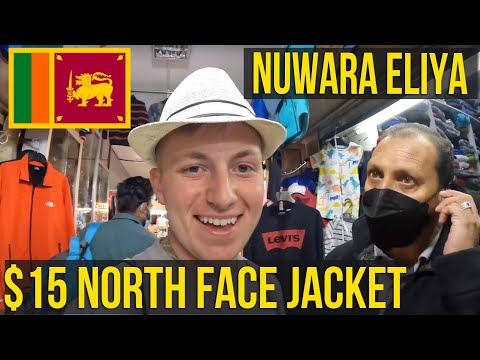
In Nuwara Eliya the question is not what a local pays but what he is actually being sold, and he asks that just as directly. A seller explains that the label-less branded jackets on the rail are factory overruns — quality-control rejects from runs made for Western brands, which cannot be sold locally with the name on. Harry still can’t tell which garments on the stall are that and which are copies, but he now knows what he is choosing between, which is the same benefit in a different currency.
Demonstrated in
- Local Girl Shows Me Sri Lanka’s Burj Khalifa 🇱🇰 — the ten-times ticket price, asked for and paid.
- Fake Market Hunt in Kandy, Sri Lanka 🇱🇰 — asking a seller what a local would be quoted, and being told.
- $14 North Face Jacket in Nuwara Eliya 🇱🇰 — asking what the goods actually are, and getting the whole trade explained.
Videos featuring Ask what a local pays

Video
Fake Market Hunt in Kandy, Sri Lanka 🇱🇰
A morning in Kandy's clothes and fabric market in heavy rain — asking vendors outright what a local would pay, a $4 puzzle box, a $5 cricket cap, and a stranger who leads him to the produce market instead.
Video
$14 North Face Jacket in Nuwara Eliya 🇱🇰
An hour comparing jackets across one hill-town market, and the seller's explanation of why the labels are cut out — factory overruns and QC rejects that can't legally be sold locally.

Video
Local Girl Shows Me Sri Lanka's Burj Khalifa 🇱🇰
A day driving a rented tuk-tuk around Kandy with a Sri Lankan friend — a spiral tower with a staircase too narrow to pass on, a Buddhist temple explained as they walk it, and a long conversation about marriage and dating.