Country
Nepal
Harry's observations from his 2023 Nepal series — Kathmandu's Newari, Tibetan and Thakali kitchens, Buddhist and Hindu quarters side by side, and dal bhat every day.
Nepal
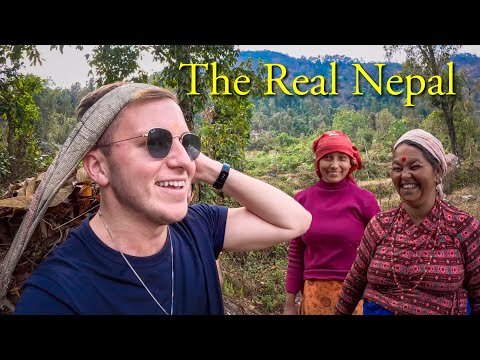
Harry spent an extended trip in Nepal in 2023, based out of Kathmandu, producing a series of videos across the country. The theme he sets out on day one and keeps returning to is diversity — that a country this size holds Newari, Tibetan and Thakali cooking, Hindu and Buddhist quarters, and hill and valley cultures within a few streets of each other.
Observations
From Nepal Ultimate $50 Food Challenge🇳🇵
- Food is the argument: his premise is that the country’s cultural diversity shows up on the plate, and four meals in one day bear it out — a Newari feast, charcoal sekuwa barbecue, cold Tibetan-quarter noodles and dal bhat have almost nothing in common with one another.
- Dal bhat is the national staple, eaten daily by most people because it’s cheap and easy to make: rice, lentils, vegetables, a meat if affordable, pickles and yoghurt as dessert, all on one plate and eaten with the hands. Harry is told there is no wrong way to eat it.
- Newari cuisine is its own tradition — a mixed platter of buffalo, beaten rice, marinated potato and egg; bara, a thick lentil pancake his hosts call Nepali pizza; chatamari, a thin-bread version with meat; and yomari, a sweet dumpling filled with hot syrup.
- Raksi, the rice spirit, comes with etiquette rather than a drinking culture: it’s offered to guests in any household, poured from a height, drunk alongside food rather than to get drunk, and declining it is fine. Harry compares it to vodka but stronger.
- Offal is health food: bone marrow, and goat head served whole — high in protein, given to people who are ill and to pregnant women, and normally made into soup.
- Buddhism and Hinduism side by side: Boudha is a Buddhist and heavily Tibetan quarter with a stupa Harry dates to the fifth century, while the monkey temple and the Hindu sites sit elsewhere in the same city.
- Tibetan refugees: the community around Boudha are largely refugees whom the Nepalese government permitted to settle.
- Prayer flags carry written prayers, and the colours stand for the elements; the wind is what spreads them.
- Two-tier entry pricing: the Boudha stupa is free for Nepalis and 500 rupees for foreigners.
- Hospitality: the Newari restaurant refused to let him pay at all.
- Getting around: no metro in Kathmandu, and the traffic is negotiated by drivers weaving through it.
From Nepalese Girl Shows Me Kathmandu🇳🇵
- Hinduism at Pashupatinath: the country’s most sacred Hindu site and, with Varanasi, one of the two that matter most — having visited both counts for something. Non-Hindus cannot enter the main temple; foreigners pay 1,000 rupees for the complex, where Nepalis go free.
- Death is public here. Cremations run continuously in the open on the riverbank with families and onlookers present, and the ashes go into a river that runs on toward the Ganges. Yisha expects to be cremated on the same ghats.
- Sadhus sit and smoke charas openly in the temple complex and will talk to visitors about it. Harry filmed, asked, and declined repeatedly.
- Regional cuisines are distinct enough to plate separately: the Krishnarpan tasting menu at Dwarika’s runs one course per region — Newari, the Terai plains, the mountains, the Himalayas — which is the food argument from the first video made formal.
- Food ritual: a portion of the first course is offered to gods and ancestors, and only the first, because eating renders the rest impure.
- Nepali rice is distinguishable from Indian rice by taste, according to Yisha, and considered better locally.
- Taxi pricing: expect roughly double the fair price as an opening quote — 700 against the 400 Harry paid — with ride apps as the reference.
- Generosity again: a taxi driver tried to give Harry the ride for free and offered to wait an hour, unpaid, in case they needed him after dinner.
- Language: kati hoyo is “how much”, and Harry’s problem is understanding the number that comes back.
From $250 Super Secluded Hotel Nepal🇳🇵
- The country in three strips, per a Kathmandu driver and the clearest framing anyone gives Harry: the Himalaya, the hills, and the plains. The people of each look different — mountain Nepalis read as Southeast Asian, hill people as a mix, and plains people as Indian, since the Terai runs to the border. His driver, from the south, says it counts against him socially.
- Domestic flying carries real risk: Kathmandu to Pokhara is 25 minutes against an eight-hour coach, and an aircraft had come down on that route about a month before Harry took it. He flew anyway and said plainly it was the first flight in hundreds he’d been nervous about.
- Pokhara against Kathmandu: smoother roads, wider streets, much less pollution, no traffic. Kathmandu also bans car horns, with limited effect.
- Round houses: traditional hill homes were built circular because a curved wall survives an earthquake better. They have nearly died out — the walling takes longer and the craftsmen are gone.
- Royal history is recent: a hotel Harry stays in belonged to Princess Jayanti, a cousin of King Birendra, whose reign ended in the royal massacre.
- Climate: it had not rained anywhere he’d been for seven months, and the first rain was treated as good news.
- Tourism has shifted: hotels that took European and American guests before the pandemic now take mostly Indian ones.
- Trekking is the economy: most guests at a lakeside hotel were there either side of a circuit.
From Cycling Around Nepal With My Dad!🇳🇵
- Town and countryside are different countries. Harry’s strongest observation in Nepal: twenty minutes out of the Pokhara tourist strip he did not meet an unhappy person, while the people working in town looked worn down by it. His explanation is that rural people have what they need and live in the nature everyone else flew in to look at.
- Village life, seen from a bicycle: houses built earthquake-proof around a firewood furnace and a shared water supply, rice winnowed by hand, hay stored for the buffalo, fishing nets made by hand, and families who invite a stranger in to look round.
- Buffalo are the capital asset: a milking buffalo gives five litres at a time and cost around 150,000 rupees (from video – unverified). The milk sells at 200 and won’t be handed to you unboiled.
- Roadside guest houses double as restaurants with no menu — fried bighead fish at 450, from fish running to 17 kilos.
- Tourist pricing is not automatic. Suspecting a juice seller of charging him double, Harry waited to watch an Indian customer buy the same thing, found the price identical, and apologised. Worth setting against every other haggling entry in the bundle.
- Costs: a bicycle 150 an hour or 450 for three, against a name, a hotel and an ID card; grilled sweetcorn 100; a locally made wool jacket around 4,000 after bargaining.
- Shopkeepers’ hours: seven in the morning to nine at night.
From King Dillip and Prince Harry Explore Nepal🇳🇵
- The ticketed sight is not always the good one: Devi’s Fall in Pokhara is viewed through bars from a platform Harry couldn’t see the water from, while the 100-rupee cave across the road descends a hundred metres and reaches the same waterfall from below. He rates the cave the best thing he did in the country to that point.
- Hiring a driver for the day works better than a fare-by-fare arrangement — no meter, no agreed price, and the driver picks the route.
- Gifts get refused here too, and Harry generalises it: Nepalese people never like receiving them. He had to argue a cap, sunglasses, a coffee and a basket onto his driver across one day.
- The mountains are the national fact: eight of the world’s ten highest are in Nepal.
- Costs of living: a driver’s house rents for 8,000 rupees a month and a shop-house for 13,000, against daily earnings Harry converts to about $35 (from video – unverified).
- Chinese construction again — the second-largest Shiva statue in the country was built by Chinese contractors, per his driver.
- Buddhist and Hindu sites share the map: a 1947 peace pagoda, one of eighty worldwide, sits on a hill above a Hindu cave temple and a Shiva statue.
- Coffee is grown and ground here, by hand, on a cranked grater.
From 96 Hours Living With a Nepalese Family🇳🇵
The fullest account of rural life in the bundle — four days in Barang, a foothill village at 1,500 metres, fifteen kilometres from the nearest city, of about eighty families.
- Resource sharing is the organising principle. Any of the eighty households may take another family’s surplus corn or chillies without asking, because the surpluses are in different things. Harry sets it directly against what he calls Western individualism.
- The working day starts before six. By nine the household has fed and milked the buffalo, cleaned the house, taken the goats out and cooked lunch. The afternoon is a forty-minute climb to cut fodder, carried back on a head strap, done daily — including by women in their fifties, who Harry says stop only when they have to.
- Buffalo are not eaten, and not for religious reasons: the family become attached to an animal they feed and milk every day. All the animals have names.
- Butter is a two-day process: milk warmed and cooled becomes yoghurt overnight, is churned for over half an hour on a rope-and-pulley churn, drained solid, then boiled into a clarified butter that keeps a year — the butter poured over dal bhat.
- Masala is ground on a stone, by hand. No blender in the house.
- Everything on the plate is grown on the plot.
- The forest provides more than fodder: amala for dehydration, cinnamon bark straight off the tree for masala and tea, and leeches for the visitors.
- Leopards take dogs and young goats from the village; one took the host family’s dog during lockdown. No attacks on people.
- They would move to the city — for better infrastructure, they say plainly. But the host’s summary is that this is a hard life and a happy one, and that they are happier than Harry is. Both halves are recorded here because he reports both.
- Nobody drinks. Harry notes the village is alcohol-free and very healthy, and that he found dancing sober harder than expected.
- Evenings are communal: neighbours and extended family gather on a porch for folk songs and dancing.
- Village earnings are given as about $5 a day (from video – unverified), and one of the men has worked in Dubai.
From Local Girl Cooks Me Nepal’s Spiciest Noodles🇳🇵
- Raksi is distilled at home, and the method is simple and laborious: millet fermented twelve to fifteen days, boiled in a sealed pot with a pan of cold water on top, the vapour condensing on the cold base and running off — with the water swapped four times as it heats, or the taste suffers. Drunk warm off the still.
- Nepal eats instant noodles at scale, more per head than almost anywhere by Harry’s host’s account, and the very spicy versions are recent — around five years old.
- The local antidote to chilli is sugar and butter, which Harry describes as life-changing and immediately regrets not knowing in Sri Lanka.
- Honey: every village has a beekeeper, comb is eaten solid, and bee-sting therapy is offered for back and bone complaints. This is ordinary honey — not the mad honey Nepal is known for.
- Farming is unmechanised: corn ploughed behind two oxen with a wooden plough, smaller plots turned by hand. Monkeys steal potatoes; leopards take goats and dogs.
- Children work, and Harry reports his host’s framing rather than his own: fourteen-year-olds set fishing nets before school and sell the catch for around five dollars, and it is described as necessity rather than child labour.
- Jimbu, a mountain herb, goes into dal; amala is eaten for dehydration.
Videos featuring Nepal
Video
96 Hours Living With a Nepalese Family🇳🇵
Four days in a Himalayan foothill village of 80 families — milking buffalo at dawn, churning butter that keeps a year, and a daily 40-minute climb to cut fodder that Harry cannot keep up with.

Video
Nepal Ultimate $50 Food Challenge🇳🇵
Four meals across Kathmandu on a $50 budget with a local guide — a Newari feast on a hillside, sekuwa barbecue including goat head, hand-pressed noodles in Boudha, and dal bhat to finish.

Video
Nepalese Girl Shows Me Kathmandu🇳🇵
Yisha takes Harry round Kathmandu — the cremation ghats and sadhus of Pashupatinath, a taxi driver who refuses payment and gets 4,000 rupees anyway, and a six-course Nepali tasting menu at Dwarika's.

Video
$250 Super Secluded Hotel Nepal🇳🇵
Harry flies to Pokhara on the route where a plane crashed a month earlier and checks into the Fish Tail Lodge — a lake island reached by hand-pulled ferry, once a princess's property, whose profits fund healthcare for Nepalese children.

Video
King Dillip and Prince Harry Explore Nepal🇳🇵
A day around Pokhara with Dilip, a taxi driver turned guide — a caged waterfall, a cave 100 metres underground that reaches it from below, the World Peace Pagoda, and a 10,000-rupee thank-you at his family's shop.

Video
Local Girl Cooks Me Nepal's Spiciest Noodles🇳🇵
Distilling raksi from millet in a village still, harvesting honeycomb with the village beekeeper, ploughing corn behind oxen, and losing badly to a packet of instant noodles.

Video
Cycling Around Nepal With My Dad!🇳🇵
Harry and his dad rent bikes in Pokhara and ride out of the tourist strip into the rice-field villages — a house tour, a buffalo farm, roadside fried fish — and he comes back convinced the countryside is where the happy people are.
Linked from
- Barang Place
- Kathmandu Place
- Pokhara Place
- Dilip Person
- Harry's dad Person