Place
Pokhara
Nepal's lakeside second city and trekking base — cleaner, wider and calmer than Kathmandu, under the Annapurna range, with a hotel on a lake island reached by hand-pulled ferry.
Pokhara
Nepal’s lakeside second city, under the Annapurna range and beneath Machapuchare — the fishtail mountain the local landmarks are named after. Harry arrives from Kathmandu and the comparison is immediate and one-sided: smooth roads instead of broken ones, wider streets, far less pollution, more space and no traffic. His only reservation on arrival is that he came to Nepal for nature and hasn’t seen any yet, which the lake fixes the next morning.
He describes the city as having two sides — the tranquil one and the adventure one. Most visitors at his hotel were trekkers, staying either side of a circuit.
Getting there
A 25-minute flight from Kathmandu against an eight-hour coach. Harry took the flight and was visibly nervous about it: an aircraft had come down on the same route roughly a month earlier, and he says it’s the first flight in two or three hundred he’s been anxious about. He flew a 72-seater rather than the small aircraft he expected, on a two-hour delay, with cotton wool handed out for the ears.
Pokhara’s airport is new and, he is told, Chinese-built. A taxi into town ran 800 rupees.
Phewa Lake
The centre of everything here. Fishermen work it, pedal boats and kayaks are rented off the shore, and there is a Hindu temple on an island in the middle.
Reaching the temple island normally costs 1,000 rupees for a boat across. Renting a kayak also costs 1,000 — and Harry paddled it himself in about twenty minutes, arriving at the island by what he cheerfully calls the unofficial route. The island holds the temple, a small market selling rings and shrines, and nothing else: no food, no drink, no restaurant. Take your shoes off.
Out to the villages
The best day Harry has in the city is spent leaving it. Bicycles rent at 150 rupees an hour or 450 for three, against a name, a hotel and an ID card; the rental shop will tell you which direction to ride, and the answer is away from the lake, into the rice fields.
Twenty minutes out the tourist streets stop and the villages start — rice paddies, fishing nets being made by hand, hay stores, chickens, and buffalo herds that will not move off the road for you. Village houses are built earthquake-proof, with a firewood furnace and a shared water supply; families will invite you in to look. On a farm he watched a woman winnow rice by hand, and met a milking buffalo giving five litres at a time that had cost around 150,000 rupees (from video – unverified). Buffalo milk sells at 200 a go, and you won’t be allowed to drink it unboiled.
Roadside guest houses double as restaurants with no menus. Fried bighead fish — the fish run to about 17 kilos — came to 450, with raksi alongside.
Harry’s conclusion from the ride is on ride out past the tourist strip: he didn’t meet an unhappy person in the villages, while the people working the tourist town looked worn out by it.
The sights
Best done with a driver — Dilip took Harry round the lot in a day, waiting at the bottom of every hill.
- Devi’s Fall — the advertised waterfall, and the one disappointment. The viewing platform is caged, presumably after accidents, and from the main point Harry could not see the water at all. There is a better angle from the side, where the channel the water has cut through the rock is visible.
- Gupteshwor Mahadev cave — directly across the road, 100 rupees for foreigners, and the thing Harry rates the best he did in the city. It descends roughly a hundred metres underground and comes out at the foot of the same waterfall you couldn’t see from the platform. Filming is prohibited in parts of it.
- The World Peace Pagoda — built in 1947 by a monk, one of eighty in the world and one of two in Nepal. Now as much a viewpoint over the Annapurna range as a religious site. It’s a walk up, past a coffee farm that grinds its beans by hand on a cranked grater and sells cold coffee at 250 a cup.
- The hill station at 1,500 metres, with the second-largest Shiva statue in Nepal — built, Harry is told, by Chinese contractors — and a sacred cow beside it.
The pattern worth taking from the day: the ticketed viewpoint was the worst stop and the 100-rupee cave across the road was the best.
Shopping
Wool jackets, hats and knock-off outdoor brands fill the tourist streets, and they are made locally as well as imported. Expect an opening price around double: 6,000 became 4,300 once Harry mentioned another shop had quoted 3,000, and two items settled at 4,600. Shopkeepers here work seven in the morning to nine at night.
The Fish Tail Lodge
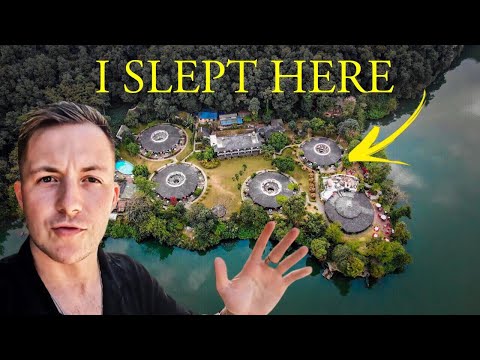
A hotel on a peninsula in the lake, reached by a ferry pulled across by hand on a rope — the same one that brings the supplies over. Sixty-one rooms, gardens, a pool, sauna and steam room, and views of the Annapurna range and Machapuchare when the cloud lifts.
The things worth knowing about it are not the amenities:
- The buildings are round because traditional Nepali hill houses were, and they were round because a curved wall stands up to an earthquake better than a rectangular one. They are barely built any more: the walling takes longer, and the people who knew how to do it have gone.
- The property belonged to Princess Jayanti, described by staff as a cousin of King Birendra, whose reign ended in the royal massacre.
- The profits are charitable. After staff and expenses, the revenue funds free healthcare for underprivileged Nepalese children — something Harry says he has never come across in a hotel.
- The staff stay. The gardener has kept the grounds for more than forty years and the receptionist has been there thirty-three, including through a pandemic that emptied the place.
- Guests used to be European and American and since the pandemic are predominantly Indian.
- King Charles stayed here in 1980, as have Jimmy Carter and Sanjeeva Reddy.
Its five-course Nepali dinner runs buckwheat bread and a spicy soup, Newari goat with mushroom and beaten rice, a thali Harry rates the best of the three he’d eaten in the country, and rice pudding with cashews and orange.
Practical facts
- It had not rained for seven months when Harry visited, and the staff were visibly pleased when it did.
- The pool is cold enough that he had it to himself.
- Nepali polite speech uses hazur; his driver taught him to use it upward rather than down.
Harry’s tips
- Fly rather than take the coach if the eight hours matter to you, and know what you’re deciding — he made the trade openly and on camera.
- Rent the kayak instead of paying for the boat. Same price, and you get the lake as well as the island.
- Ask a hotel where its money goes. The most interesting fact about this one isn’t in the brochure.
- Rent a bicycle and ask which way to ride. The single question produced his best day in the country.
- Name another shop’s price when you haggle. It moved a jacket from 6,000 to 4,300 in one sentence — see haggle with a reference price.
- Test whether you’re being charged a tourist price rather than assuming it. Harry waited to watch a local buy the same juice, found the price identical, and apologised.
Source
Videos featuring Pokhara
Video
$250 Super Secluded Hotel Nepal🇳🇵
Harry flies to Pokhara on the route where a plane crashed a month earlier and checks into the Fish Tail Lodge — a lake island reached by hand-pulled ferry, once a princess's property, whose profits fund healthcare for Nepalese children.

Video
King Dillip and Prince Harry Explore Nepal🇳🇵
A day around Pokhara with Dilip, a taxi driver turned guide — a caged waterfall, a cave 100 metres underground that reaches it from below, the World Peace Pagoda, and a 10,000-rupee thank-you at his family's shop.

Video
Local Girl Cooks Me Nepal's Spiciest Noodles🇳🇵
Distilling raksi from millet in a village still, harvesting honeycomb with the village beekeeper, ploughing corn behind oxen, and losing badly to a packet of instant noodles.

Video
Cycling Around Nepal With My Dad!🇳🇵
Harry and his dad rent bikes in Pokhara and ride out of the tourist strip into the rice-field villages — a house tour, a buffalo farm, roadside fried fish — and he comes back convinced the countryside is where the happy people are.
Linked from
- Barang Place
- Nepal Country
- Reward honesty and hard work Tip
- Ride out past the tourist strip Tip
- Dilip Person
- Harry's dad Person